A mother once told me something that stuck with me.
Her son had been to three different adventure retreats over the years. Zip-lining. Rock climbing. Rafting. He’d done it all. Each time, he came back excited, full of stories about the activities, showing off photos.
But she noticed something. A few weeks after each camp, he was exactly the same. The excitement faded. The stories stopped. Nothing had really… shifted.
“He had experiences,” she said. “But I don’t think he grew from them.”
That distinction, between having experiences and growing from them, is exactly what this blog is about.
When parents search for summer programs, they often land on two broad categories: adventure retreats and experiential learning retreats . The names sound similar. The brochures can look similar. But what happens inside them, and what children take away, can be completely different.
Let me explain what I mean.
The Three Types of Parents (And What They’re Really Looking For)
Before we compare camp types, let’s be honest about what parents are actually seeking. In my experience, parents looking for retreats fall into roughly three groups:
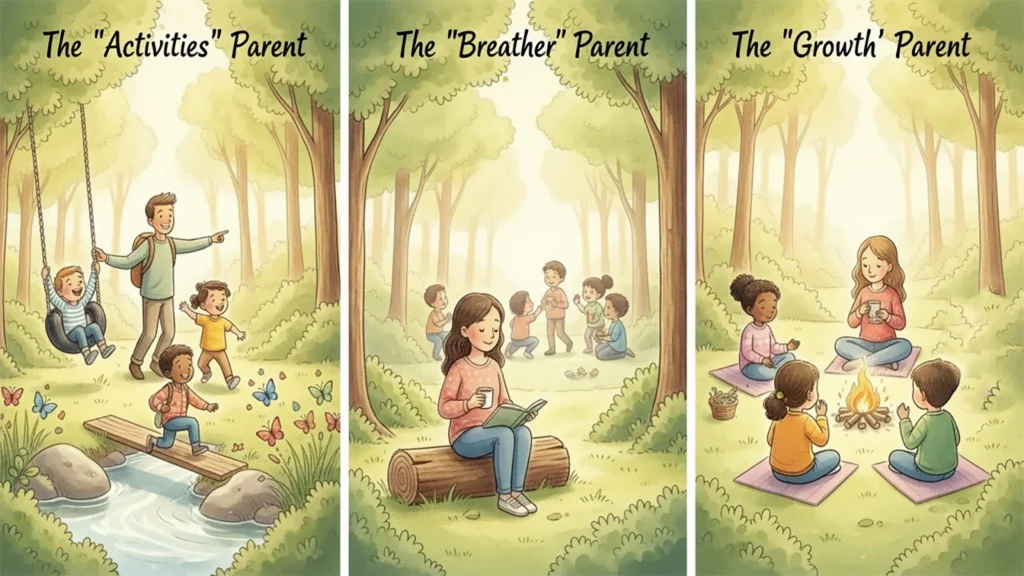
The “activities” parent: They want their child to have fun, try new things, stay active. Adventure retreats are perfect for this, packed schedules, impressive activities, tired kids at the end of each day.
The “breather” parent: Let’s be real, sometimes parents just need a break. Summer holidays are long. Kids get bored. Any decent camp that keeps children safe and engaged for a week serves this purpose. Nothing wrong with that.
The “growth” parent: These parents are looking for something more. They want their child to come back somehow different, more confident, more self-aware, more emotionally mature. They are not just filling time. They are hoping for transformation.
All three are valid. But they lead to very different camp choices.
If you’re in the first two categories, a good adventure camp will serve you well. This blog probably isn’t for you.But if you’re in the third category, if you’re hoping for something that actually shifts who your child is becoming, then the distinction between adventure retreats and experiential learning retreats really matters.
What Adventure retreats Actually Offer
Let me be clear: I’m not criticizing adventure retreats . They do what they do well.
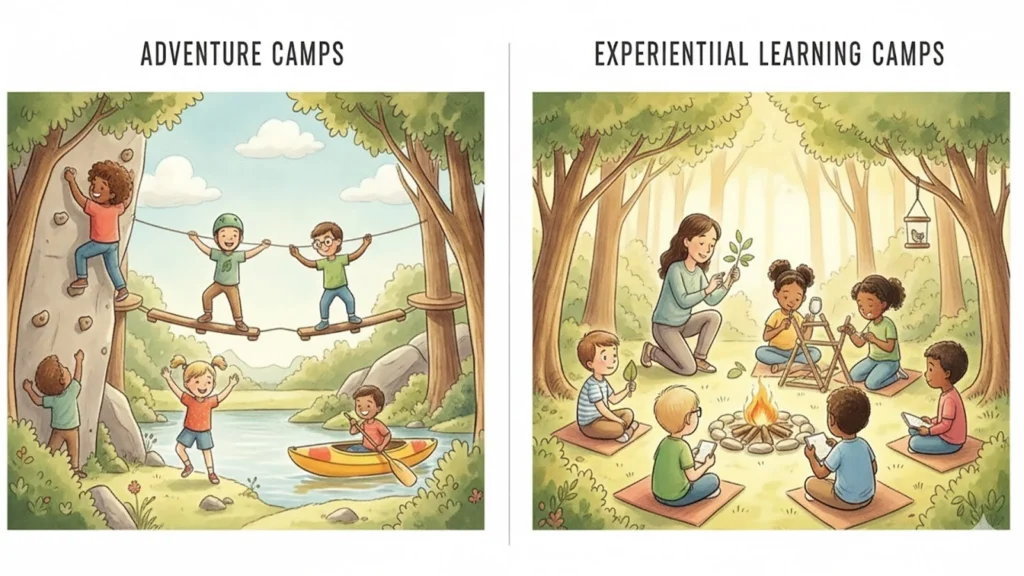
A typical adventure camp focuses on activities. The schedule is the product. Rock climbing on Monday. Rafting on Tuesday. Zip-lining on Wednesday. The appeal is variety, excitement, physical challenge.
Children come back with:
- Stories about what they did
- Photos of impressive moments
- Physical tiredness (which parents often appreciate)
- Maybe some new skills ~ how to belay, how to paddle, how to set up a tent
These are real benefits. Children who’ve never been outdoors get exposure to nature. Children who are physically timid get pushed a little. There is value in that.
But here’s what adventure retreats typically don’t prioritize:
- Processing the experience emotionally
- Understanding why something felt challenging or meaningful
- Integrating the experience into a child’s sense of self
- Creating space for reflection, not just action
The focus is on doing. What’s often missing is the meaning-making.
What Experiential Learning retreats Offer (And Why It’s Different)
Experiential learning is a term that gets thrown around loosely, so let me be specific about what it actually means.
The concept comes from educational theorists like David Kolb, who proposed that real learning happens in a cycle: concrete experience → reflection → conceptualization → experimentation. In simpler terms: you do something, you think about it, you make meaning from it, you try again with new understanding.
Most adventure retreats stop at step one. Kids have the experience. Then they move on to the next activity.
Experiential learning retreats deliberately build in the other steps. The experience isn’t the endpoint, it’s the starting point for something deeper.
What does this look like in practice?
After a challenging hike, instead of immediately moving to the next activity, there’s time to reflect. How did that feel? What was hard? What did you discover about yourself? A skilled mentor guides this conversation, not lecturing, but asking questions that help children process what just happened.
A group task isn’t just about completing the task. It’s about noticing the group dynamics. Who led? Who held back? How did conflict get handled? What does this teach us about how we show up in groups?
Time in nature isn’t just “outdoor time.” It’s an invitation to slow down, notice, and be present. What happens inside you when you stop rushing? What do you hear when you actually listen?The activities might look similar from the outside. But what happens inside the child is completely different.
The Difference in What Children Bring Home
Here’s a simple way to see the distinction.
After an adventure camp, children typically say:
- “I went zip-lining! It was so high!”
- “We did rafting and I almost fell out”
- “The food was bad but the activities were fun”
- “I want to go again next year”
After an experiential learning camp, children often say:
- “I didn’t know I could do hard things”
- “I made a friend who’s really different from me and I learned something from that”
- “I figured out that I actually like being quiet sometimes”
- “I want to think more about what I’m good at”
The first set is about what happened to them. The second set is about what happened in them.
One mother shared with us that her son returned from our program with clear goals for the coming year, articulated by him, not suggested by her. He’d done some reflection exercises during the retreat and something clicked. “He’s never been able to tell us what he actually wants,” she said. “Now he can.”
That’s the difference. Not just memories of activities, but genuine self-knowledge.
Why This Matters Developmentally
Let me bring in some psychology here, because it’s relevant.
Children between ages 6-12 are in what Erik Erikson called the “Industry vs. Inferiority” stage. Their core developmental task is building a sense of competence, learning that they can do things that matter, that they are capable.
Adventure retreats can support this. Completing a challenging climb, learning a new skill, these build competence.
But here’s the catch: competence that comes purely from external achievement is fragile. It depends on continuing to achieve. If the next challenge doesn’t go well, the confidence crumbles.
Experiential learning builds something more stable: self-knowledge. Children don’t just learn “I can climb rocks.” They learn “I can handle feeling scared and do hard things anyway.” That’s a different kind of confidence, one that transfers to situations that have nothing to do with rock climbing.
For teenagers (ages 12-18), the developmental task shifts to identity formation, figuring out “Who am I?” Adventure activities alone don’t answer this question. But guided reflection, meaningful conversations, time to explore different aspects of self, that’s exactly what identity formation requires.
This is why experiential learning retreats can be genuinely developmental in ways that activity-focused retreats often aren’t.
The Role of Mentors (This Is Crucial)
One of the biggest differences between camp types is who the adults are and what they do.
In adventure retreats , staff are typically activity instructors. Their job is to run the activity safely and efficiently. They’re experts in zip-lining or rafting or whatever the activity is. They manage groups, ensure safety, keep things moving.
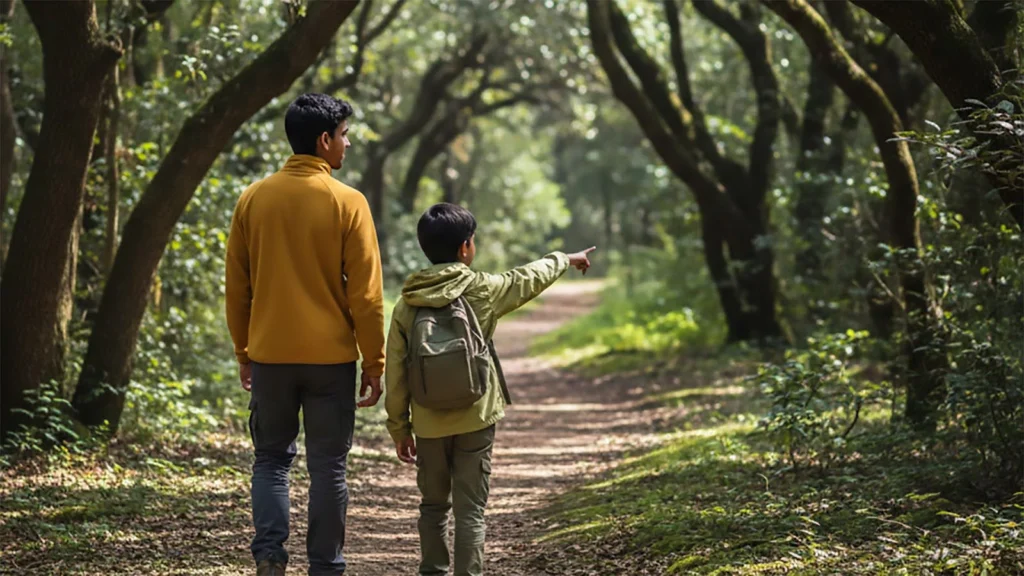
In experiential learning retreats , staff are mentors. Their job is different. Yes, they facilitate activities. But more importantly, they notice children. They ask questions. They create space for processing. They build relationships.
At Young SoulTales, we say our mentors “walk beside children, not ahead of them.” This isn’t just nice language, it’s a fundamentally different approach.
An instructor says: “Here’s how you do this. Follow these steps. Good job.”
A mentor says: “How did that feel? What did you notice? What was hard about that? What surprised you?”
The instructor is focused on the activity. The mentor is focused on the child.
This distinction matters enormously for what children take away. A child might complete an activity and feel nothing much. The same child, with a mentor who helps them process the experience, might discover something about themselves they’ll carry for years.
What About the Adventure Part?
I want to be clear: experiential learning retreats aren’t anti-adventure. At Young SoulTales, our programs include plenty of outdoor challenges, nature immersion, and physical activity.
The difference isn’t whether there’s adventure. It’s how the adventure is framed and processed.
We use adventure as a vehicle, not a destination. The trek isn’t the point, what the trek reveals about the child is the point. The group challenge isn’t the point, what children learn about themselves and each other through the challenge is the point.
You can have adventure and depth. You just have to design for both.
Questions to Ask When Choosing a Camp
If you’re trying to figure out whether a camp is truly experiential or just adventure-focused, here are some questions to ask:
What’s your mentor-to-child ratio, and how are mentors trained?
Adventure retreats might have high ratios and staff trained primarily in activity safety. Experiential learning retreats typically have lower ratios and staff trained in facilitation, emotional support, and child development.
What happens after challenging activities?
If the answer is “we move on to the next activity,” that’s adventure. If the answer involves reflection, group discussion, or processing time, that’s experiential.
What do you hope children take away from the experience?
Listen carefully to the answer. Is it about skills and memories? Or is it about self-knowledge, emotional growth, and confidence that goes beyond specific activities?
How do you handle different personalities, especially quieter or more sensitive children?
Adventure retreats often favor outgoing, physically confident kids. Experiential learning retreats should have thoughtful answers about supporting different temperaments.
What’s your philosophy about child development?
Adventure retreats might not have a clear answer to this. Experiential learning retreats should be able to articulate what they believe about how children grow, and how their program supports that.
A Simple Comparison
| Adventure retreats | Experiential Learning retreats | |
| Primary focus | Activities and skills | Growth and self-discovery |
| Staff role | Activity instructors | Mentors and facilitators |
| Schedule | Packed with activities | Includes reflection time |
| Success measure | Activities completed | Inner shifts observed |
| What kids remember | What they did | Who they became |
| Best for | Physical confidence, trying new things | Emotional growth, self-knowledge |
Neither is “better” in absolute terms. They serve different purposes.
The Young SoulTales Approach
At Young SoulTales, we’re firmly in the experiential learning category, though we don’t shy away from adventure.
Our programs for ages 6-17 are built around a few core beliefs:
The body learns before the mind. Children experience the world physically, emotionally, sensorially. Real growth happens through embodied experience, not instruction.
Reflection is where meaning happens. Experiences alone don’t create growth. Processing experiences, with skilled support, is where transformation occurs.
Every child has their own rhythm. We don’t try to produce a certain type of child. We create conditions where each child can discover who they already are.
Mentors matter more than activities. Our mentors are trained to notice, to ask, to hold space. They walk beside children, not ahead of them.
If you’re looking for a camp that fills time with impressive activities, we’re probably not the right fit.
But if you’re hoping for something that actually shifts who your child is becoming, that helps them know themselves better, trust themselves more, and grow in ways that last beyond the summer, that’s what we’re trying to offer.
Final Thoughts
The question isn’t really “adventure retreats vs experiential learning retreats .” The question is: what do you actually want for your child?
If you want them to have fun, try new things, stay active, and come back with good stories, adventure retreats deliver that. Genuinely.
If you want something deeper, if you’re hoping they’ll come back not just with memories but with genuine growth, self-knowledge, and the kind of confidence that doesn’t depend on constant achievement, then look for retreats that are intentional about exploring, not just activity.
Look for reflection time in the schedule. Look for mentors, not just instructors. Look for a philosophy about how children actually grow.
The activities might look similar from the outside. But what happens inside your child can be completely different.
That’s the difference that matters.
Explore Young SoulTales programs:
🌿 Winter & Summer retreats for Kids ~ Nature-immersive experiential learning for ages 6-12 years and for teens 12-17 ready to explore identity and build genuine confidence
Frequently Asked Questions
Are adventure retreats bad for children?
Not at all. Adventure retreats offer real benefits, exposure to nature, physical confidence, trying new things, fun memories.
They’re just designed for a different purpose. If you want your child to have an active, exciting week with lots of outdoor activities, adventure retreats deliver exactly that.
The question is whether that’s what you’re actually looking for, or whether you’re hoping for something more.
Can a camp be both adventurous and experiential?
Absolutely. At Young SoulTales, our programs include plenty of outdoor adventure, nature immersion, treks, and physical challenges.
The difference is how we frame and process those experiences. Adventure is the vehicle, not the destination. What matters is what children discover about themselves through the adventure.
How do I know if a camp is truly experiential or just using the buzzword?
What happens after challenging activities? (Look for reflection time, not just moving to the next thing.) How are staff trained? (Look for facilitation and child development, not just activity safety.) What do you hope children take away? (Look for answers about self-knowledge and growth, not just skills and memories.)
What age is experiential learning most beneficial?
It’s valuable at any age, but looks different developmentally.
For children 6-12, experiential learning builds competence and self-trust, “I can do hard things.” For teenagers 12-17, it supports identity formation, “Who am I? What do I value?”
Both stages benefit enormously from guided experience and reflection.
My child is shy and not very physically adventurous. Which type of camp is better?
Experiential learning retreats are often better for quieter or less physically confident children.
Adventure retreats tend to favor outgoing, physically bold kids. The packed schedule and activity focus can overwhelm children who need more processing time.
Experiential learning retreats , at least well-designed ones, honor different temperaments. There’s space for quieter children to engage in their own way, and mentors are trained to notice and support different personalities.
What should I look for in an experiential learning camp?
Low mentor-to-child ratios ~ so each child can actually be seen. Trained mentors ~ not just activity instructors, but people who understand child development and emotional support. Reflection built into the schedule ~ not just activity after activity. A clear philosophy ~ they should be able to articulate what they believe about how children grow. Thoughtful answers about different temperaments ~ they should have a plan for quieter or more sensitive children.
How is Young SoulTales different from other retreats ?
We’re intentionally experiential, not just adventurous.
Our mentors walk beside children, not ahead of them. Our programs include reflection time, not just activities. We don’t try to produce a certain type of child, we create conditions where each child can discover who they already are.
And we’re grounded in developmental psychology, understanding what children actually need at different stages, not just what looks impressive in a brochure.