My daughter is fourteen now. And when I look at who she’s becoming ~ creative, resilient, able to navigate her emotions, genuinely empathic ~ I don’t credit any single class or tutor or extracurricular.
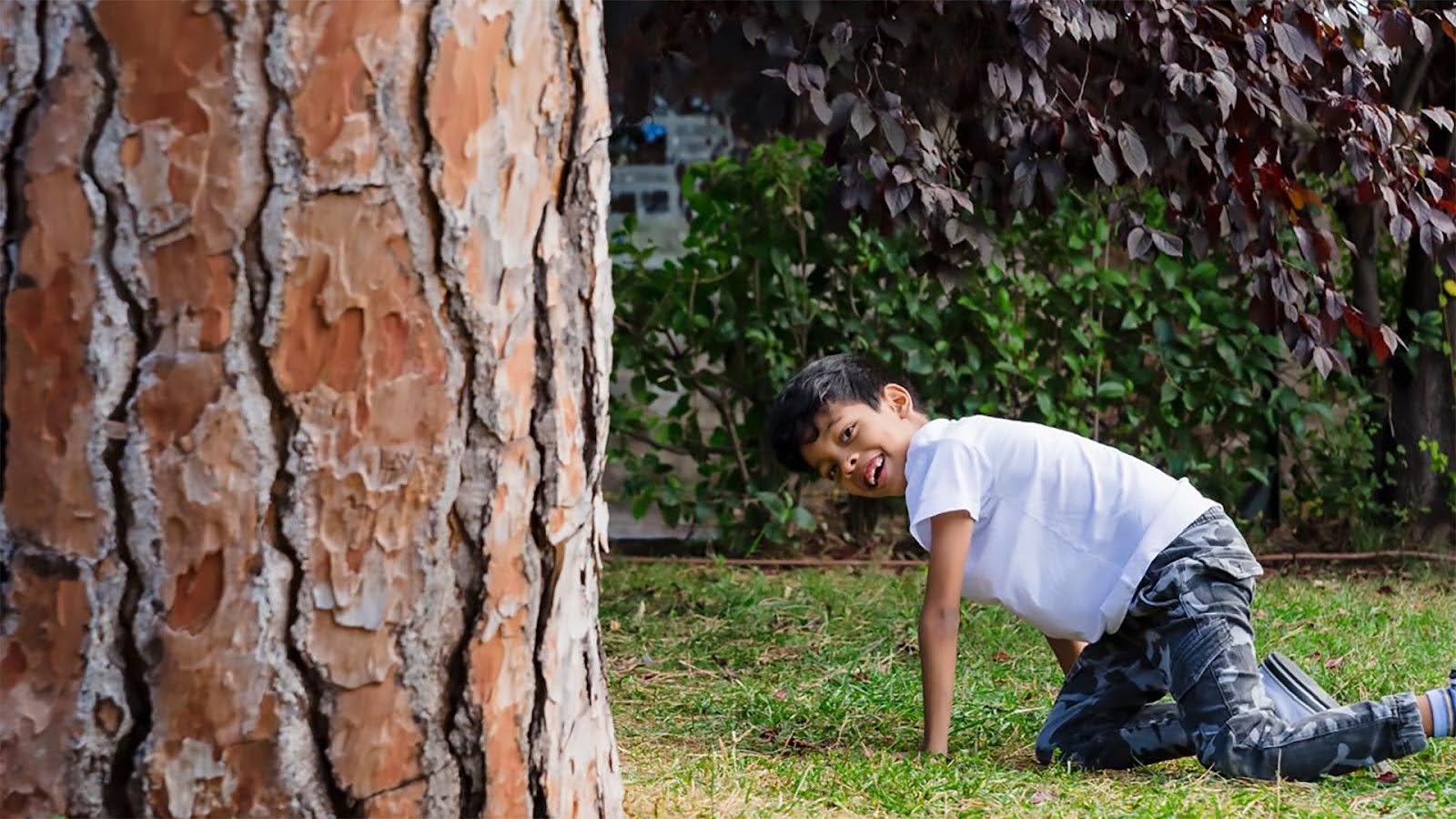
I credit thousands of hours of unstructured play. Mud and sand and water colors and wooden blocks. Time outdoors without an agenda. Experiences where no one was evaluating her, grading her, or telling her the “right” way to do things.
Personality doesn’t get built through instruction. I really believe that. It grows in the spaces between ~ in moments of challenge and boredom and figuring things out without an adult jumping in to help.This is what well-designed summer and winter retreats can offer. Not a packed schedule of impressive activities. Something harder to photograph but far more valuable: the conditions where a child’s personality can actually develop.
This is what well-designed retreats can offer. Not a packed schedule of impressive activities. Something harder to photograph but far more valuable: the conditions where a child’s personality can actually develop.
The Problem With How We Usually Think About “Development”
THere’s what I notice in conversations with parents.
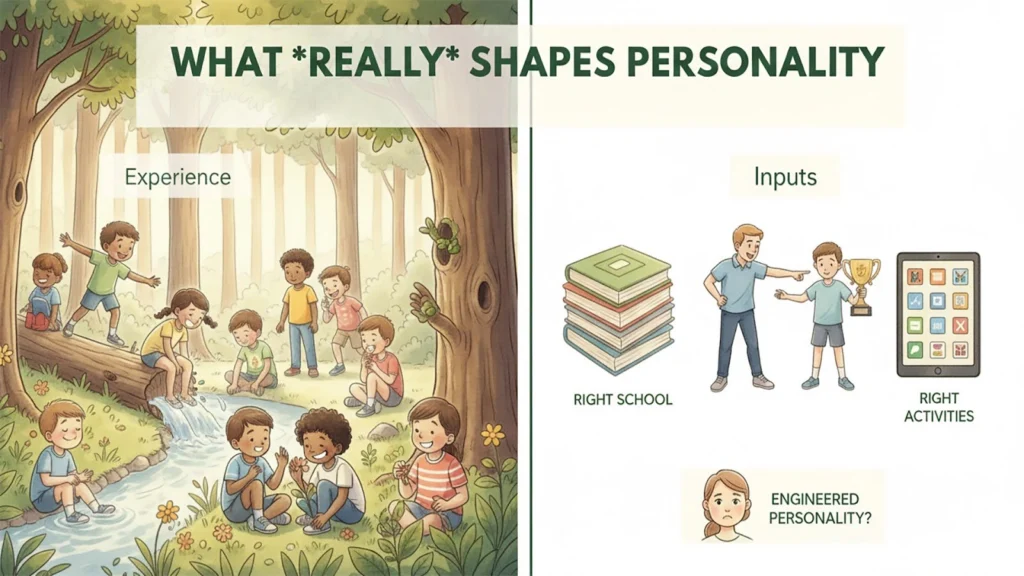
We’ve become very focused on inputs. The right school. The right coaching. The right activities. As if personality is something we can engineer by selecting the correct combination of programs.
But children aren’t products on an assembly line. You can’t install confidence. You can’t download resilience. These things emerge ~ slowly, unevenly, through lived experience.
Donald Winnicott, the British pediatrician and psychoanalyst, wrote that children need space to simply be before they can become. He called it “unintegration” ~ a state of relaxed, undemanding existence where creativity and authentic selfhood can emerge. Too much structure, too much stimulation, too much adult direction ~ and that space disappears.
Modern childhood often leaves very little room for unintegration. School is structured. Homework is structured. Even “play dates” get scheduled and supervised. Where does a child just… exist? Without performing. Without producing. Without being watched. Summer and winter retreats for kids ~ the right kind ~ can provide exactly that. A pause from the relentless productivity of regular life. Time to breathe. Space to discover who you are when no one’s telling you who to be.
What Actually Shapes Personality (It’s Not What You’d Think)
Let me share something from my training in expressive movement therapy.
The body learns before the mind has words. Children experience the world physically, sensorially, emotionally ~ and those experiences literally shape how their brains develop. This isn’t metaphor. It’s neuroscience.
When a child faces a small challenge and discovers they can handle it ~ that’s not just a nice moment. It’s building neural pathways. The felt sense of “I can do hard things” gets wired into their nervous system.
When a child has a conflict with another kid at camp and works it out without an adult intervening ~ that’s not just conflict resolution. It’s learning, in their body, that relationships can survive disagreement. That rupture isn’t the end.
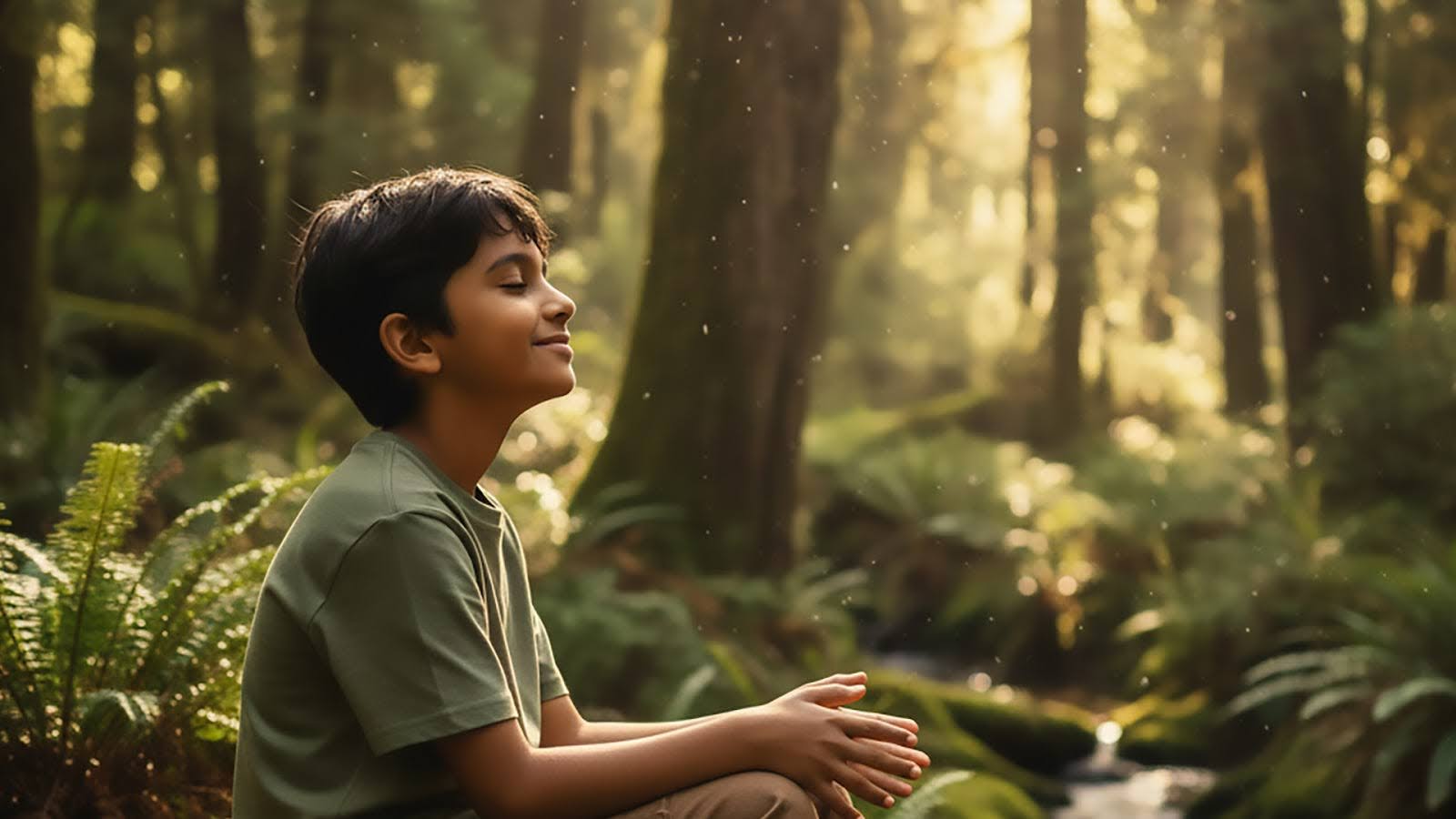
When a child spends hours in nature, moving at their own pace, noticing what they notice ~ something settles in them. Research shows that time outdoors reduces cortisol levels and supports emotional regulation. But beyond the research, there’s something about natural environments that invites children back into their bodies, away from the anxious mental chatter that modern life produces.
This is how personality actually develops. Not through being told who to be. Through experiencing who you are, in real situations, with real stakes (even if the stakes are small).
The Gift of Being Away From Home
I know this part makes some parents nervous. The idea of their child ~ especially a younger one ~ being away from home for several days.
But here’s what I’ve observed, both as a mother and in our programs: something important happens when children step outside their familiar context.
At home, children have roles. They’re the “responsible one” or the “shy one” or the “difficult one.” These roles get reinforced daily ~ by siblings, by parents, by the physical environment itself. It’s hard to become someone new in a place that remembers who you’ve always been.
Camp offers a clean slate.
No one knows your child was “the quiet kid” in class. No one expects them to behave a certain way. They get to experiment with being different ~ bolder, more open, more themselves ~ without the weight of accumulated expectations.
John Bowlby, who developed attachment theory, talked about children needing a “secure base” from which to explore. But here’s the interesting thing: as children develop, that secure base gradually becomes internal. They carry it with them. A well-supported experience away from home actually strengthens this internal security. The child discovers: I can be okay even when my parents aren’t right here. I have resources inside myself.
That’s a profound developmental achievement. And it doesn’t happen in the living room.
Four Ways retreats Actually Build Personality
I want to be specific about this. Not vague claims about “building confidence” ~ but actual mechanisms of how personality develops in camp settings.
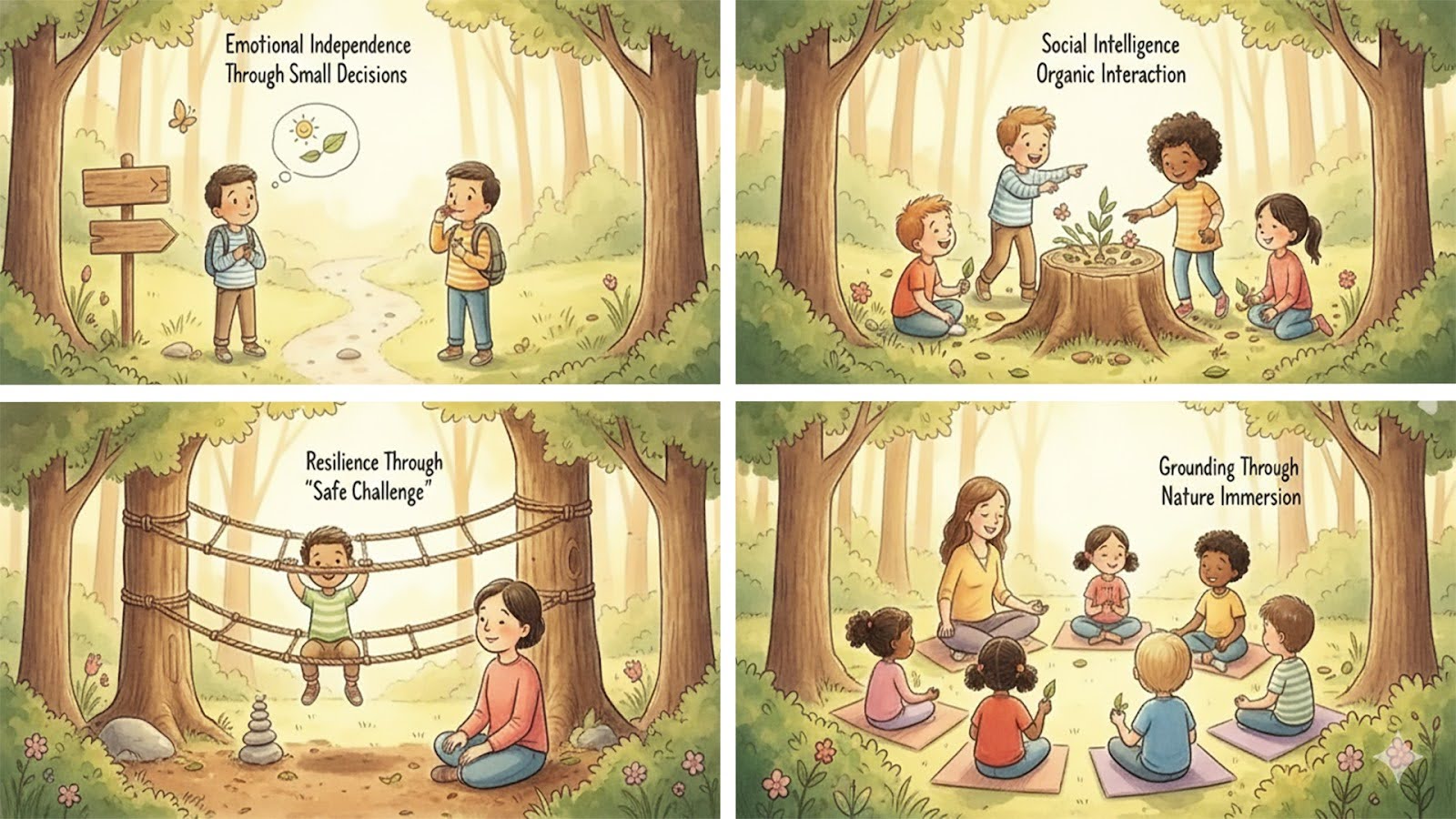
1. Emotional Independence Through Small Decisions
At home, parents make hundreds of micro-decisions for their children. What to wear. When to eat. How to spend time. This isn’t bad parenting ~ it’s just the nature of family life.
At camp, children face small decisions constantly. Should I join this activity or that one? How do I handle this disagreement? What do I do with this uncomfortable feeling?
Each decision is practice. Over days, the child develops what I’d call an “inner compass” ~ the ability to check in with themselves and choose, rather than always looking to an adult for direction.
2. Social Intelligence Through Organic Interaction
Classrooms have rules. Raise your hand. Wait your turn. Don’t talk during lessons. Social interaction happens in the cracks ~ recess, lunch, the walk between classes.
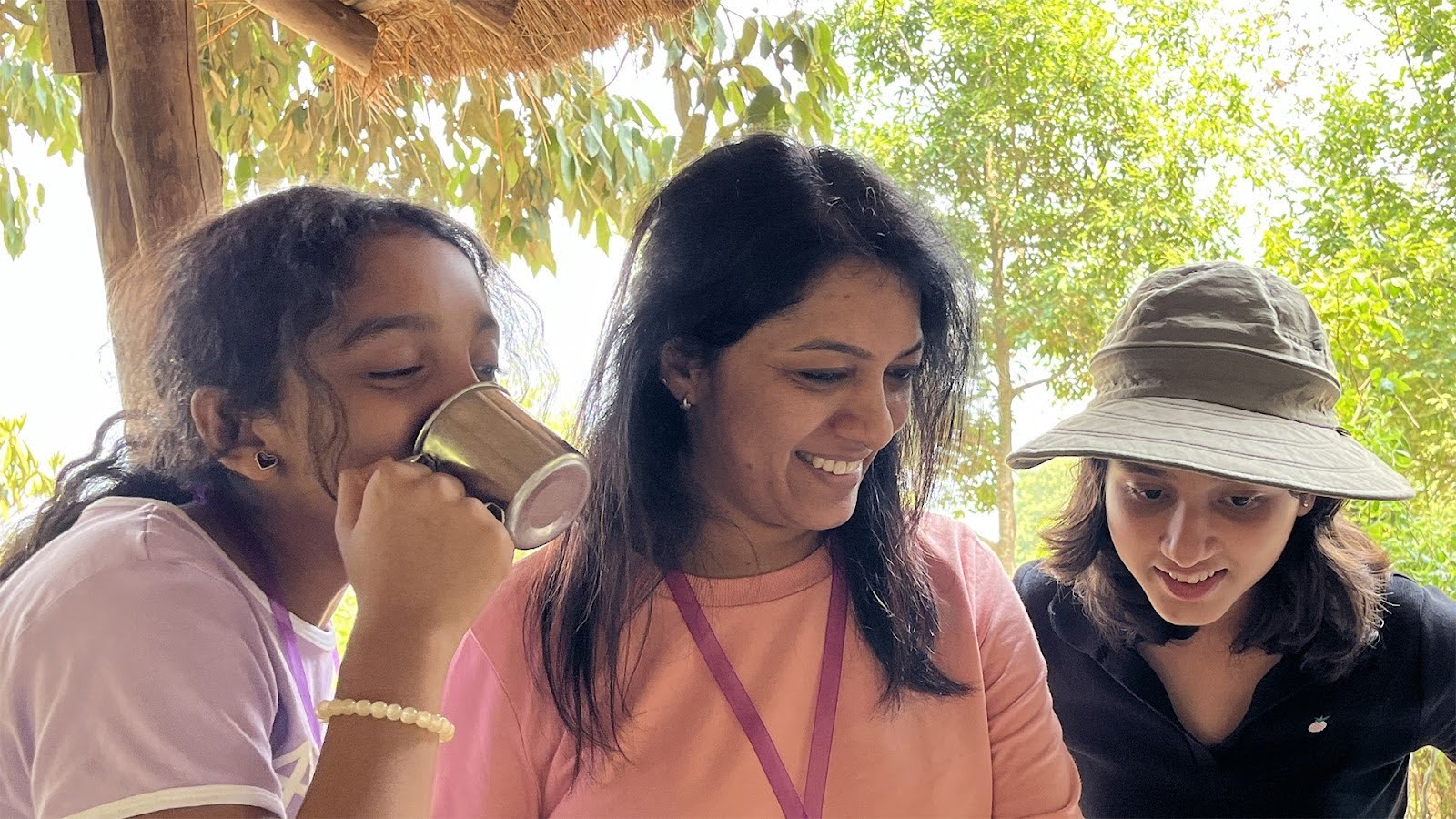
retreats flip this ratio. Social interaction becomes the main event. Children are living together, playing together, navigating group dynamics in real time.
Gabor Maté talks about how children need “multiple playmates of different ages” ~ something that was natural in traditional communities but is increasingly rare today. retreats recreate this. A ten-year-old learns from watching a twelve-year-old. A seven-year-old gets gentle support from an older child. This cross-age interaction builds social intelligence in ways same-age classrooms can’t.
3. Resilience Through “Safe Challenge”
Here’s something I believe deeply: resilience isn’t taught. It’s earned.
You can’t lecture a child into being resilient. You can’t give them a worksheet on “bouncing back from setbacks.” They have to actually experience a setback ~ and discover they survived it.
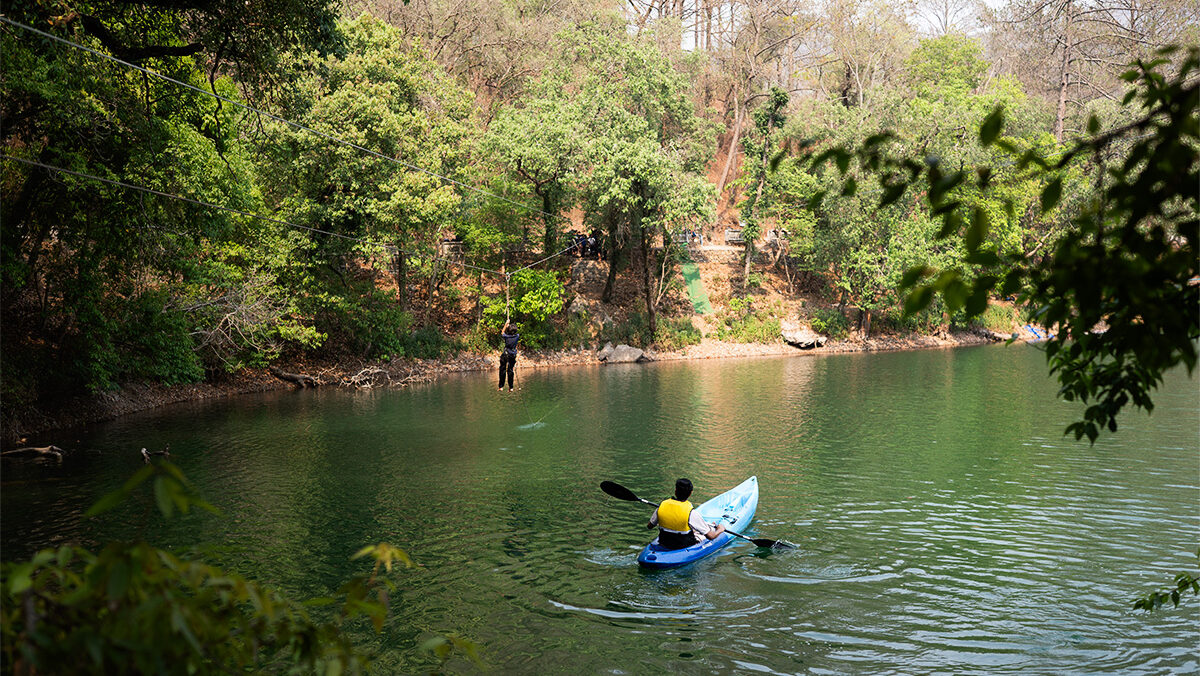
Good retreats provide what I’d call “safe challenge.” Real difficulty, but with support nearby. A hike that’s genuinely hard. A group task that requires real cooperation. A moment of homesickness that passes. A conflict that gets worked through.
Each of these builds what psychologists call “stress inoculation.” The child’s nervous system learns: I felt uncomfortable, and I was okay. I can handle more than I thought.
4. Grounding Through Nature Immersion
This one’s simple but profound.
Modern children spend most of their time in artificial environments ~ climate-controlled rooms, fluorescent lights, flat floors, rectangular screens. Their nervous systems are adapted to a world that didn’t exist until very recently.
Nature is the original environment. Human bodies evolved for thousands of generations in forests and fields, near water and under open sky. When children spend extended time outdoors, something recalibrates. Breathing deepens. Attention shifts. The constant background anxiety of modern life ~ the subtle sense that something’s wrong, something needs to be checked, something’s about to happen ~ finally quiets.
Research confirms that forest environments reduce stress hormones. But you don’t need research to see it. Watch a child after three days outdoors. They move differently. They’re more present. More themselves.
Summer vs. Winter: Different Seasons, Different Gifts
We run both summer and winter retreats for kids, and they’re not just the same program in different weather. Each season offers something distinct.
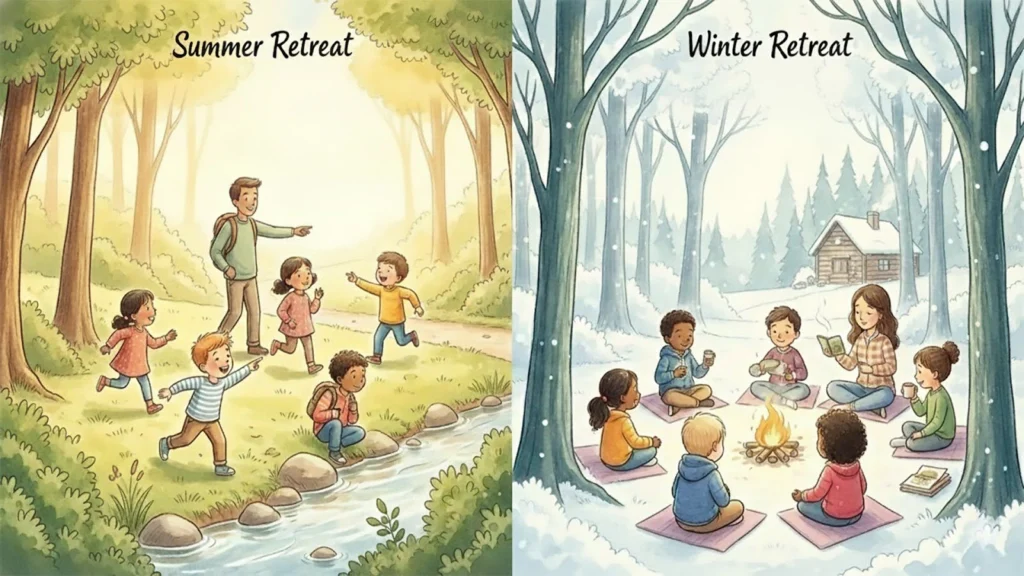
Summer retreats tend toward energy, exploration, and expansion. Longer days. More outdoor time. Children are naturally more active, more social, more outward-focused. It’s a season for building connections, trying new things, discovering what you’re capable of physically and socially.
Winter retreats have a different quality. Shorter days create natural rhythms of activity and rest. There’s more time for reflection, for quiet conversation, for inner work. Children who might get lost in the social energy of summer sometimes find their footing in winter’s slower pace.
I think of it this way: summer builds the doing self. Winter builds the being self. Both matter. A balanced personality needs both ~ the confidence to act and the groundedness to simply exist.
What About Older Children and Teens?
Personality development doesn’t stop at twelve. In some ways, adolescence is when the most significant shaping happens.
Teenagers are asking fundamental questions: Who am I? What do I believe? Where do I belong? These questions need space to be explored ~ and most of teenage life doesn’t provide that space. School is about performance. Social media is about comparison. Home is complicated by the necessary tension of growing independence.
Our Programs for ages 12-17 are designed specifically for this developmental moment. Not “leadership” in the corporate sense ~ we’re not training future CEOs. Leadership in the sense of: Can you lead yourself? Can you know what you value and act on it? Can you be part of a group without losing yourself?
These programs help teenagers:
Identify what actually matters to them (not what they think should matter). Understand their own communication patterns and emotional reactions. Practice making values-based decisions when it’s inconvenient. Experience what it feels like to lead with empathy rather than authority.One parent told me their son returned from our program with a clear sense of his goals for the coming year ~ articulated by him, not imposed by them. That kind of clarity is rare in teenagers. It doesn’t come from instruction. It comes from having space to discover what you actually think.
The Young SoulTales Philosophy
I should be honest about our approach, because it’s not for everyone.
We don’t try to “shape” children’s personalities. That language implies we know what shape they should be ~ and we don’t. Every child carries their own rhythm of becoming. Our job isn’t to mold them into some predetermined form.
What we do is create conditions. Safety, so children can take risks. Nature, so they can settle into themselves. Mentorship that walks beside rather than directs from above. Time that isn’t scheduled to the minute.
Then we trust the process.
Young SoulTales programs aren’t about performance. They’re about presence. We’re not trying to produce “confident children” or “resilient children” or any other adjective-children. We’re trying to let each child discover who they already are ~ and grow from there.
That might sound passive. It’s not. Creating the right conditions is actually very intentional work. Knowing when to step in and when to hold back. Noticing when a child needs support and when they need space. Building a container that’s safe enough for real growth to happen.
But the growth itself? That belongs to the child. Not to us.
Final Thoughts
Here’s what I’ve come to believe about personality development:
You can’t force it. You can’t rush it. You can’t optimize it with the right combination of inputs.
What you can do is create the conditions where growth naturally unfolds. Time away from routine. Immersion in nature. Real challenges with real support. Adults who see children clearly without trying to change them.
Summer and winter retreats ~ the good ones ~ offer exactly this. Not a program that “builds personality.” A space where personality can build itself.
At Young SoulTales, we hold that space. And then we trust what emerges.
Because the goal isn’t to shape your child into someone new. It’s to help them become more fully who they’ve always been.
Explore our programs:
🌿 Winter & Summer retreats for Kids
Nature-immersive experiences for ages 6-12, designed for emotional growth and self-discovery
and for teens 12-17 years ready to explore identity, values, and authentic leadership.
Frequently Asked Questions
At what age do retreats start making a difference?
Children as young as six can benefit, though the experience looks different at different ages.
For younger children (6-9), it’s about first tastes of independence, sensory experience in nature, learning to be part of a group. For older children (10-12), it’s more about developing competence, taking on responsibility, building genuine confidence. For teens, it’s about identity ~ figuring out who they are and what they value.
Each stage matters. And honestly? Sometimes the younger a child starts, the more natural it feels to them.
What personality traits actually develop at camp?
The ones that can’t be taught in a classroom.
Emotional resilience ~ the felt sense that “I can handle hard things.” Self-trust ~ knowing your own preferences and instincts. Social flexibility ~ being able to navigate different personalities and group dynamics. Groundedness ~ a kind of inner steadiness that comes from time in nature and away from screens.
These aren’t skills you can lecture into a child. They emerge through lived experience.
Is there really a difference between summer and winter retreats ?
Yes, and it’s more than just weather.
Summer tends to be expansive ~ more energy, more social interaction, more outward exploration. Great for building confidence and connection. Winter tends to be reflective ~ slower rhythms, more introspection, more inner work. Great for children who need space to think, or who get overwhelmed by high-energy environments.
Both seasons support growth. Just different flavors of it.
My child has never stayed away from home. Is camp too big a leap?
It’s a fair concern. And every child is different.
Some take to it immediately ~ they’ve been ready for independence and just needed the opportunity. Others need more time to warm up, and that’s okay. Our mentors are trained to support both. The homesickness that sometimes happens on day one usually transforms by day three into “I don’t want to leave.”
If you’re unsure, reach out to us. We can talk through your specific child and what might help them feel ready.
What role do the mentors play in all this?
Huge role ~ but maybe not how you’d expect.
Our mentors don’t instruct or direct. They walk beside children. Watching. Noticing. Available when needed, but not hovering. Creating emotional safety without controlling every moment.
When a child feels truly seen by an adult who isn’t evaluating them, something opens up. That’s what our mentors provide.
How is this different from what happens at school?
School is mostly about cognitive learning. Information transfer. Right answers.
Camp is about experiential learning. Doing, feeling, reflecting. There’s no test at the end. No grades. Children learn things about themselves ~ their limits, their capacities, their preferences ~ that no curriculum can teach.
How does Young SoulTales approach this differently?
We’re not trying to produce a certain kind of child. No molds. No predetermined outcomes.
We create conditions ~ nature, safety, mentorship, time ~ and we trust what emerges. Each child has their own “rhythm of becoming,” and our job is to support that rhythm, not override it.
It’s slower than some approaches. Less flashy. But what emerges is real.