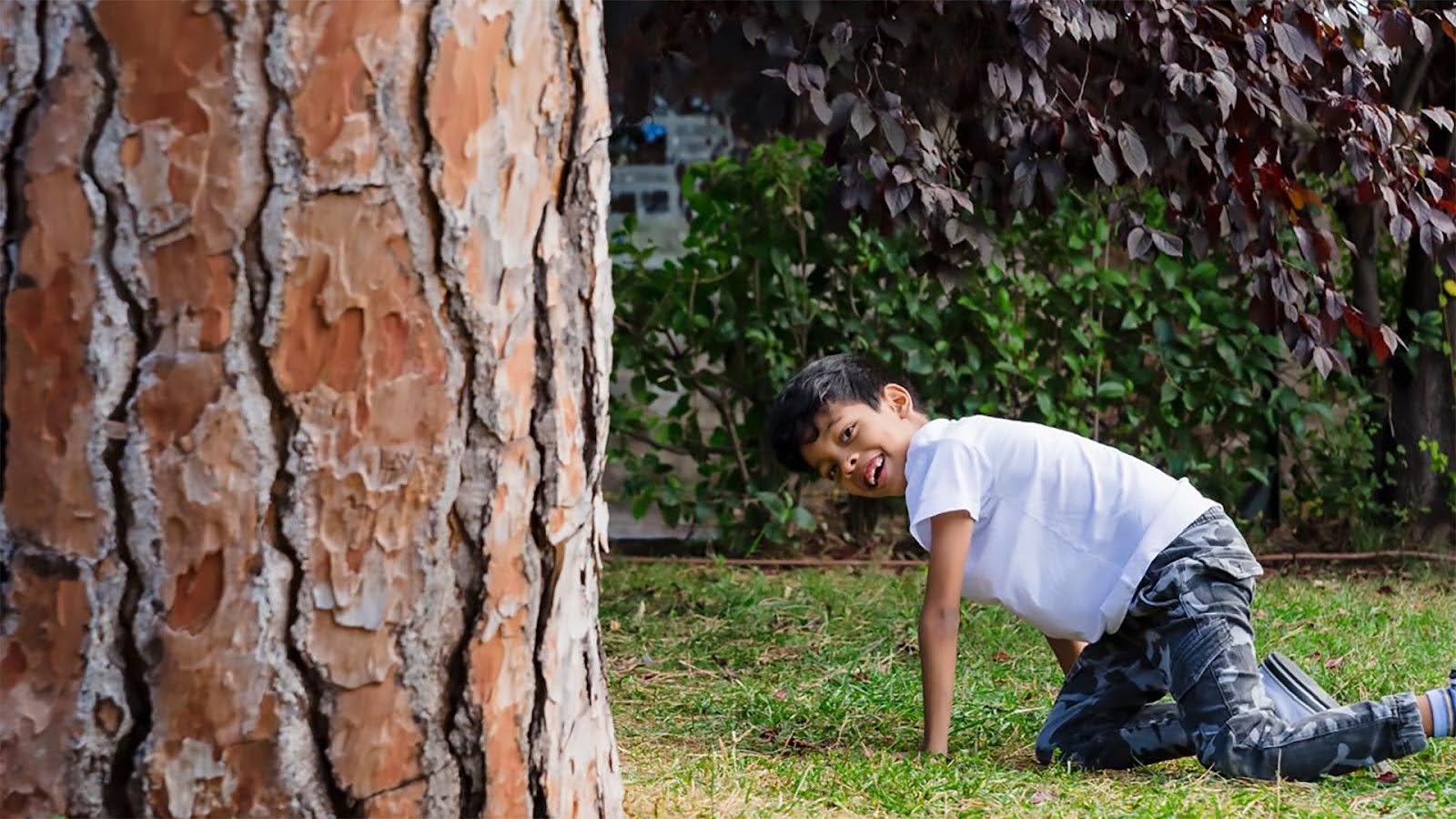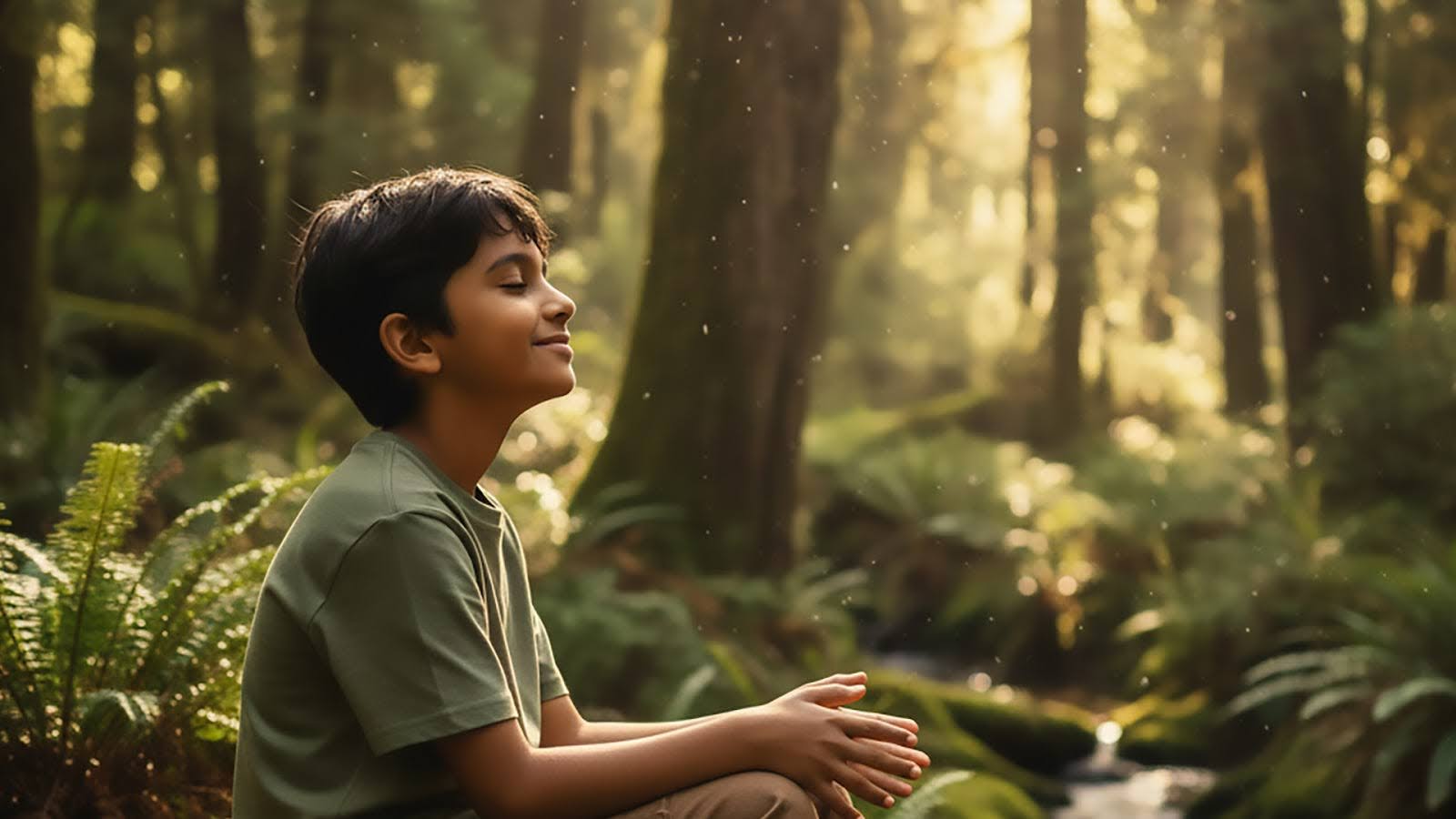
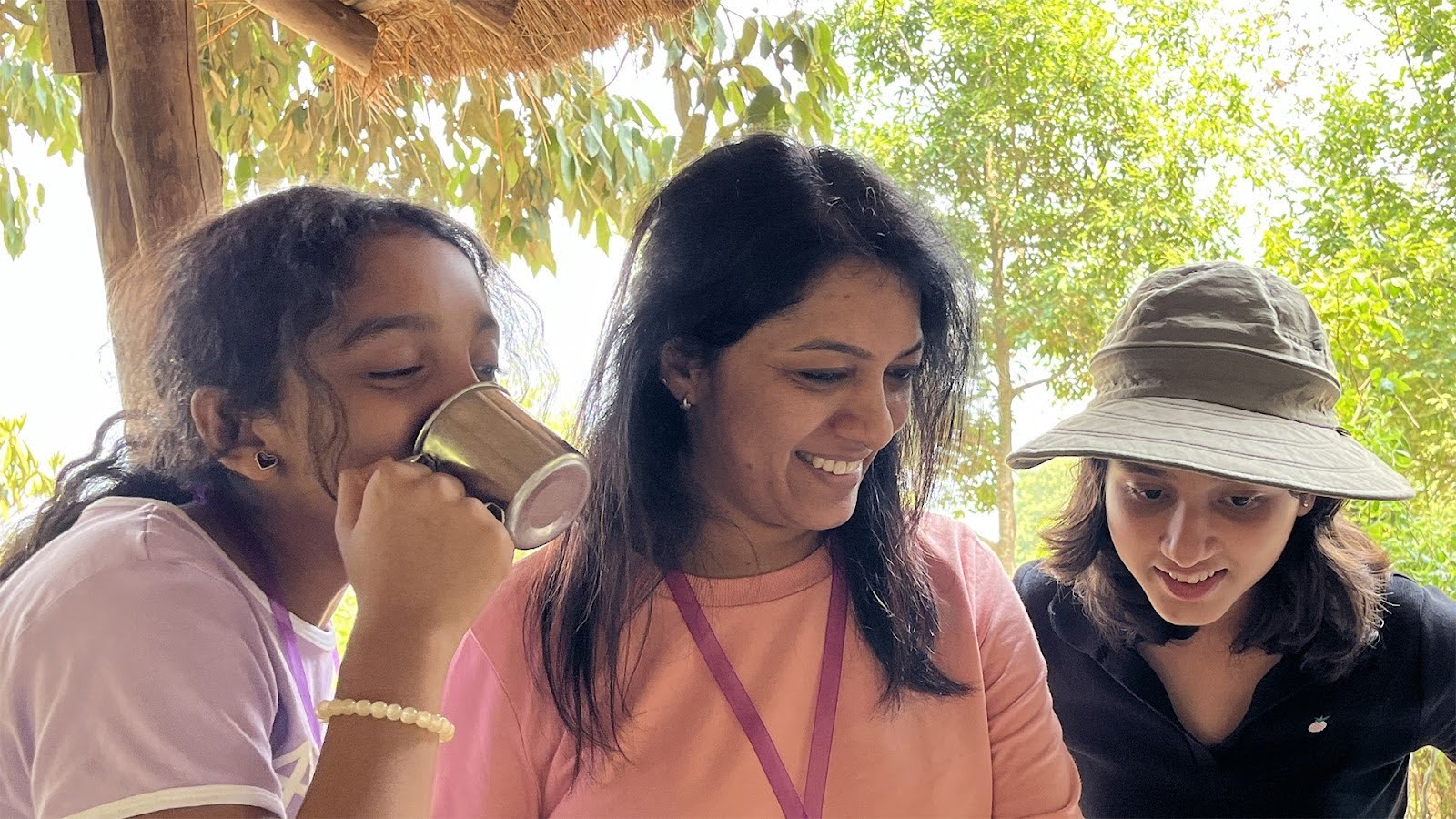
I watched a nine-year-old surprise himself last summer.
He’d been quiet the first two days ~ hanging back, observing, letting others take the lead. The kind of child who waits to see if it’s safe before stepping forward. By day three, something shifted. He was organizing his small group for a task, delegating roles, checking if everyone was okay. No one told him to. He just… stepped into it.
His parents later told me he’d never done anything like that at school. Too much pressure there, maybe. Too many eyes watching, evaluating. But here ~ in a forest clearing, with a small group of kids he’d only known for 48 hours ~ he found something in himself.
That same week, a few children started writing poems. Not because we assigned it. Just because something in them wanted to express what they were experiencing. Others discovered they could be accommodating, flexible, part of a team in ways they hadn’t tried before.
None of this was on the schedule. There was no “leadership activity” planned between lunch and the nature walk. It happened because we’d created conditions where it could happen.
This is what I wish more parents understood when searching for summer retreats for kids near Pune. The flashy activities on a brochure aren’t what change children. The space between activities is where the real growth happens.
The Question Behind the Question?
When parents search for summer retreats for kids near Pune, they’re usually looking for a few things: safety, good activities, maybe some learning, and ~ honestly ~ a break from the “I’m bored” complaints of summer vacation.
All fair. But underneath those practical concerns, there’s often a deeper hope. There is hope that their child will come back somehow… different. More confident. More independent. More themselves.
The tricky part is: that kind of growth doesn’t come from packed schedules and impressive-sounding activities. It comes from something harder to put in a brochure.
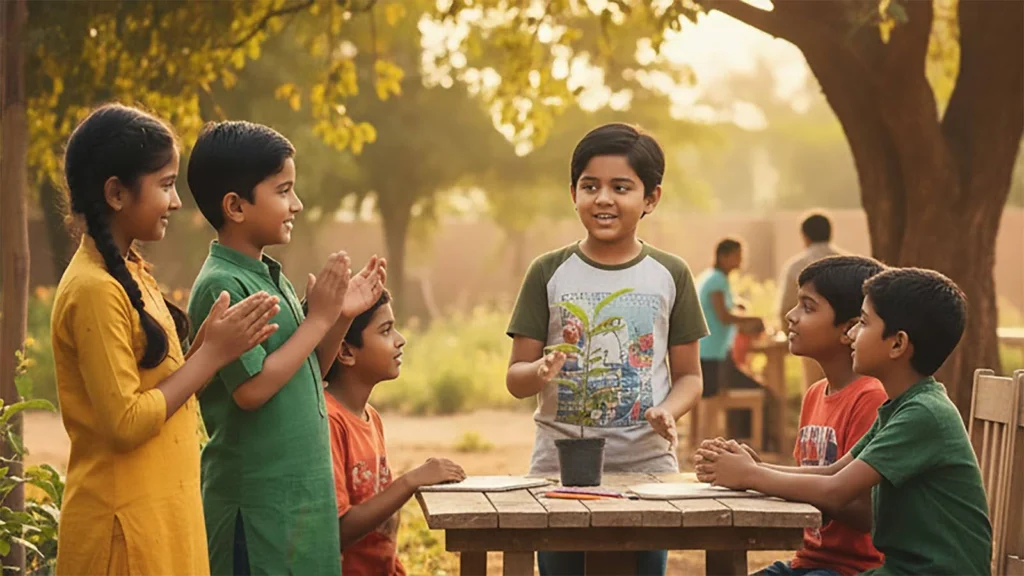
It comes from being seen. From having space to figure things out without an adult jumping in. From being part of a small community where you matter ~ not for your grades or your talents, but just for being you.
What’s Actually Happening for Children Ages 6-12
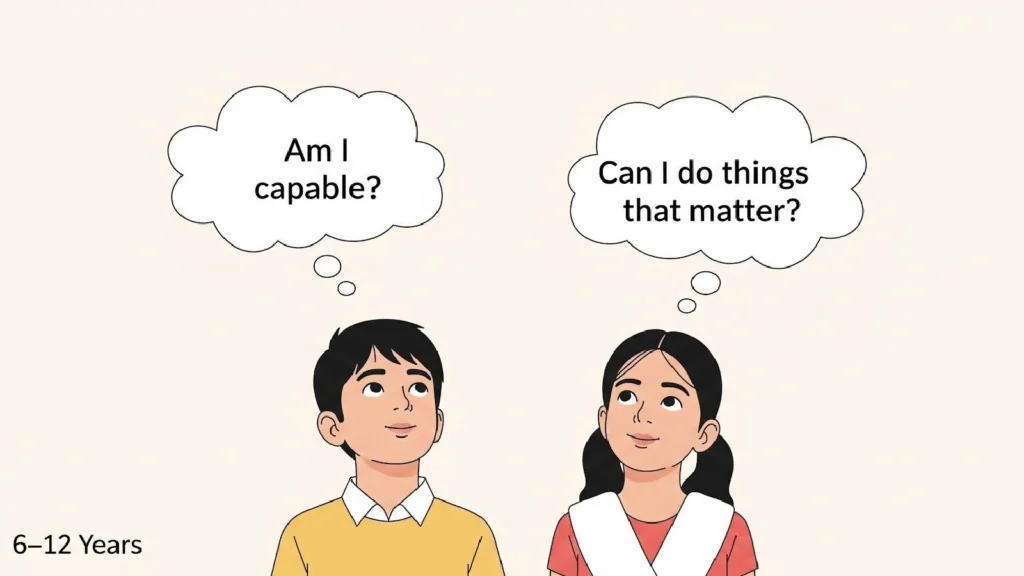
Children carry stress differently than adults. They may not have the words for anxiety, but their bodies Here’s something worth knowing about the age group we work with.
Erik Erikson, the developmental psychologist, identified a specific stage children move through between roughly ages 6 and 12. He called it “Industry vs. Inferiority.” During these years, children are figuring out a fundamental question: Am I capable? Can I do things that matter?
When children succeed at tasks ~ when they build something, contribute to a group, solve a problem ~ they develop what Erikson called a sense of “industry.” Competence. The quiet confidence that says, “I can handle things.”
But when children are constantly corrected, compared, or not given real responsibility, they develop the opposite: a sense of inferiority. A nagging feeling that they’re not quite enough.
This is why the design of a summer camp matters so much for this age group. Are children given real tasks, or just entertained? Are they trusted with responsibility, or managed every moment? Do they get to fail safely and try again, or are adults always hovering to prevent mistakes?
The retreats that actually help children grow are the ones that understand this developmental moment ~ and design experiences around it.
The Safety Question (Let’s Talk About It Honestly)
I know what parents worry about. Safety is usually the first question, and it should be.
Young SoulTales is a newer name in this space. We don’t have decades of brand recognition like some of the bigger outdoor camp companies. So when parents ask, “How do I know my child will be safe?” ~ I understand the question completely.
Here’s what I can tell you:
We maintain a high mentor-to-child ratio. Not because it looks good on paper, but because meaningful connection is impossible when one adult is managing twenty children. Our mentors are trained not just in physical safety protocols, but in emotional attunement ~ noticing when a child is withdrawing, when something feels off, when a quiet moment of support is needed.
Safety, for us, isn’t just about preventing physical harm. It’s about creating an environment where children feel emotionally safe enough to take risks, make mistakes, and be honest about how they’re feeling.
John Bowlby, the psychiatrist who developed attachment theory, talked about children needing a “secure base” ~ a stable, reliable presence from which they can explore the world. When children feel securely attached to the adults around them, they venture further, try more, grow more. When they don’t feel that security, they contract. They play it safe. They don’t let themselves be fully seen.
A good camp provides that secure base. Not by hovering or overprotecting, but by being consistently present, responsive, and trustworthy.
What Actually Helps Children Grow (It’s Not What Most retreats Advertise)
Let me be direct about what I’ve observed ~ both as a mother and as someone training in expressive movement therapy.
The activities don’t matter as much as you’d think.
Whether it’s rock climbing or pottery or forest walks ~ the what is less important than the how. Is the child being rushed through a checklist of experiences? Or is there time to actually absorb what’s happening? Are adults directing every moment? Or is there space for children to lead, to figure things out, to sit with boredom until creativity emerges?
Gabor Maté, the physician and child development expert, lists four essential needs of children: attachment, rest, emotional freedom, and free spontaneous play. Notice what’s not on that list? Skill-building activities. Achievement-oriented programming. Instagram-worthy adventure moments.
What children actually need is simpler ~ and harder to provide in our current culture. They need adults who are present without being controlling. Time that isn’t scheduled to the minute. Permission to feel whatever they’re feeling without being fixed or hurried along.
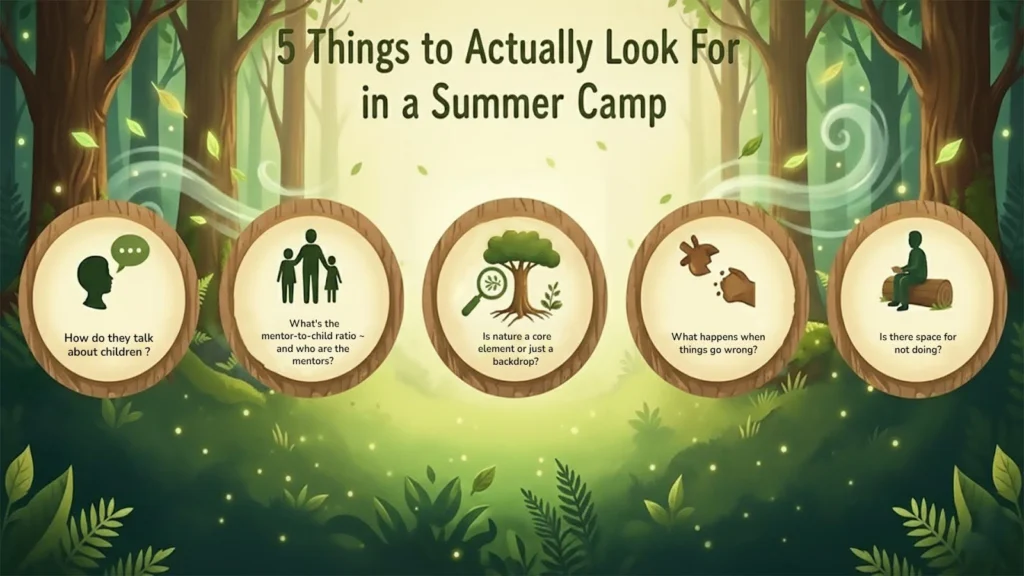
5 Things to Actually Look For in a Summer Camp
If you’re comparing summer retreats for kids near Pune, here’s what I’d suggest looking beyond the activity list:
1. How do they talk about children?
Listen to the language. Is it about “shaping” kids, “building” skills, “making” them confident? Or is it about creating conditions where children can discover their own capabilities?
There’s a big difference between a camp that sees children as raw material to be molded and one that sees them as whole people with their own “rhythm of becoming” (a phrase we use at Young SoulTales).
2. What’s the mentor-to-child ratio ~ and who are the mentors?
Numbers matter. But so does quality. Are mentors just activity supervisors? Or are they trained to notice the emotional undercurrents ~ the child who’s pretending to be fine, the one who needs a quiet moment away from the group?
At Young SoulTales, our mentors walk beside children, not ahead of them. They’re not there to instruct. They’re there to witness, support, and gently guide when needed.
3. Is nature a core element or just a backdrop?
Some retreats happen to be outdoors but could just as easily happen in a gymnasium. The location is incidental.
For other retreats ~ including ours ~ nature is essential to the experience. Research shows that time in natural environments reduces cortisol, improves attention, and supports emotional regulation in children. But beyond the research, there’s something about being in nature that strips away the performance pressure of everyday life. Children breathe differently. They notice differently. They become more themselves.
4. What happens when things go wrong?
This is a question most parents don’t think to ask. But it reveals a lot.
How does the camp handle conflict between children? What about a child who’s struggling emotionally? What if someone doesn’t want to participate in an activity?
The answer tells you whether the camp is designed around children’s actual developmental needs ~ or around making things convenient for the staff.
5. Is there space for not doing?
This might sound strange. But retreats that pack every minute with activities might actually be replicating the overscheduled stress children experience during the school year.
Donald Winnicott, the British pediatrician and psychoanalyst, wrote that “it is in playing and only in playing that the individual child or adult is able to be creative and to use the whole personality.” But the kind of play he meant wasn’t structured activity. It was open-ended, self-directed, imaginative play ~ the kind that requires unscheduled time.
If a camp never lets children get bored, it might be stealing something essential from them.
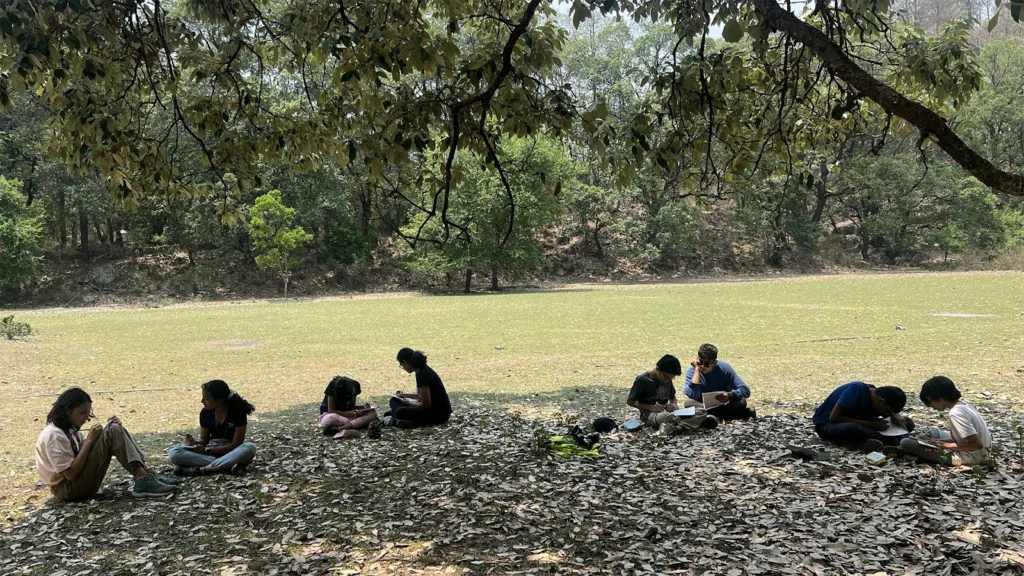
How Young SoulTales Does Things Differently
I’m not going to pretend we’re for everyone. We’re not.
If you’re looking for a camp with the most activities, the most “adventure,” the most impressive Instagram content ~ there are other options that will serve you better.
What we offer is different. Our programs for ages 6-12 are designed around what children at this developmental stage actually need: meaningful responsibility, connection with nature, emotionally attuned mentors, and space to discover who they are when no one’s telling them who to be.
We don’t try to “shape” children. We create conditions where their natural growth can unfold.
One parent told me after their child returned from our program: “He came back so clear about what he wants for the next year. We did an Ikigai exercise and vision board, and for the first time, he could actually articulate his goals. Not our goals for him ~ his.”
That’s what we’re aiming for. Not children who’ve been through an impressive list of activities, but children who know themselves a little better.
Questions to Ask Before You Enroll (A Different Kind of Checklist)
Forget the standard questions about facilities and food (though those matter too). Try these:
How does the camp support emotional well-being?
Not just physical safety ~ emotional safety. What happens when a child is struggling? What’s the philosophy around difficult feelings?
What role do mentors play in daily experiences?
Are they instructors? Supervisors? Something else? How are they trained?
Is nature a core part of the program or just a setting?
What’s the intention behind outdoor time? Is it just “fresh air” or something more deliberate?
How does the camp handle different personalities?
What about the quiet child? The sensitive one? The one who needs more time to warm up?
What values guide the design of the curriculum?
This question will tell you a lot. Some retreats won’t know how to answer it. That’s an answer in itself.
The Real Question
Here’s what I think the search for summer retreats for kids near Pune is really about:
Parents want to know their child will be okay. Not just physically safe ~ though that’s essential ~ but emotionally held. Seen. Given room to grow in ways that school and home sometimes can’t provide.
The right summer camp doesn’t just fill your child’s vacation. It gives them an experience of themselves they might not get anywhere else. A taste of who they are when they’re not performing, not competing, not being measured.
At Young SoulTales, that’s what we’re trying to offer. Not a list of activities. A different kind of space.
If that resonates with you, we’d love to meet your child.
Winter & Summer retreats for Kids ~ Nature-immersive experiences for ages 6-12, and 12-16 appropriately designed around emotional growth and self-discovery.
Frequently Asked Questions
How is Young SoulTales different from adventure retreats ?
Honestly? We’re not trying to compete with adventure retreats . Different purpose entirely.
Most summer retreats for kids focus on activities ~ the more thrilling, the better. We focus on what’s happening inside the child. Nature and gentle adventure are tools, not the point. The point is self-discovery, emotional growth, learning to be part of a community. Some of the most important moments at our retreats happen in the quiet spaces between activities.
Is the environment suitable for sensitive or introverted children?
Especially for them.
We don’t push children to be louder or more outgoing than they are. Our mentors are trained to notice different temperaments and respond accordingly. Some children need space. Some need quiet encouragement. Some need to watch for a while before joining in. All of that is okay here.
We say our mentors “walk beside children, not ahead of them.” That means following each child’s rhythm, not forcing them into ours.
What kind of safety measures and supervision do you provide?
Safety is foundational ~ but we think about it more broadly than most.
Physical safety: high mentor-to-child ratio, trained staff, appropriate equipment, clear protocols. But also emotional safety: mentors who notice when something’s off, an environment where children can express difficult feelings, no tolerance for shaming or excessive competition.
We want children to feel safe enough to take risks. That’s where growth happens.
My child has never been away from home for multiple days. Will they be okay?
This is such a common concern. And a fair one.
Some children take to it immediately. Others need time. We’ve seen both ~ and we’re prepared for both. Our mentors know how to support a child who’s missing home without making them feel like something’s wrong. Often, by day two or three, these same children are the ones who don’t want to leave.
If you’re worried, reach out to us directly. We can talk through your specific child and what might help them feel ready.
What do parents usually say after their child returns?
The feedback that means most to us isn’t about the activities. It’s things like: “She seems more sure of herself.” “He actually told us about his feelings ~ that never happens.” “She came back with clarity about what she wants.”
One parent recently said their son returned from our program with specific goals for the coming year ~ articulated by him, not imposed by them. That felt like a win.